
US–Israel Strikes on Iran Ignite New Middle East Crisis

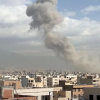
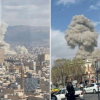
The United States and Israel have launched military strikes on Iran, marking a sharp escalation in regional tensions and raising the risk of wider conflict.
Officials in Washington and Jerusalem described the action as pre-emptive. Critics, however, questioned whether the campaign was driven by an immediate threat or by a calculation that Iran’s current weaknesses created a strategic opportunity.
Iran enters the confrontation under significant strain.
The country faces economic pressure, the consequences of last year’s conflict, and political fallout from a crackdown on domestic unrest. Israeli and American leaders appear to have assessed that these conditions reduce Tehran’s ability to respond effectively.
Prime Minister Benjamin Netanyahu, who has consistently identified Iran as Israel’s principal security threat, now faces a critical political moment with elections approaching. In the past, his approval ratings have risen during periods of military confrontation.
President Donald Trump’s position has shifted over time. Earlier this year he signalled support for Iranian protesters, stating that assistance was forthcoming. At the same time, his administration demanded limits on Iran’s missile programme and its regional alliances, leaving little space for negotiation.
Mr Trump has repeatedly characterised Iran as a global threat, citing concerns over its nuclear ambitions, although Washington has not presented evidence of an imminent move to produce a nuclear weapon. The legal basis for the strikes has prompted scrutiny. The doctrine of self-defence is being invoked despite the significant disparity in military power between the US–Israel alliance and Iran.
The absence of publicly available evidence of an immediate threat raises questions under international law. Analysts caution that once hostilities begin, escalation can be difficult to contain, particularly if strategic objectives are not clearly defined.
Both Mr Trump and Mr Netanyahu have suggested that the operation could weaken or even remove Iran’s ruling authorities. Historical precedent offers limited support for this view. Governments in Iraq and Libya fell only after invasions or internal uprisings supported from abroad, and both countries experienced prolonged instability.






Add new comment