
How Nairobi’s Water System Operates and Why Shortages Persist

Nairobi is facing persistent water shortages as demand in the city continues to exceed available supply, placing sustained pressure on its distribution network.
The capital, home to nearly five million people, requires about 900 million litres of water each day. However, supply has not kept pace with population growth. Most of Nairobi’s water is sourced from the Aberdare Ranges, where rivers and catchments feed key facilities including Ndakaini, Sasumua and Ruiru dams.
Raw water from these sources is transported to treatment plants outside the city before being pumped into Nairobi’s distribution system. After treatment, it is stored in service tanks and reservoirs and then delivered through pumping stations to households, businesses, hospitals and industries across the city.
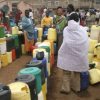
Despite this infrastructure, many neighbourhoods experience frequent shortages. The distribution network is divided into zones to manage supply and billing, but residents in high-rise buildings or areas at higher elevations often rely on rationing schedules. Communities located closer to reservoirs or on lower ground generally receive water more consistently.
Rapid urban growth has intensified the problem. New residential estates and informal settlements depend on infrastructure that was built for a much smaller population. Ageing pipelines, which are vulnerable to leaks and bursts, further disrupt supply, with some areas enduring outages that last for weeks. Illegal connections and vandalism also divert water from authorised users.
Environmental factors have added to the strain. Irregular rainfall, extended dry periods and human activity in forested catchment areas have reduced both water availability and quality. These pressures have exposed weaknesses in the supply system managed by the Nairobi City Water and Sewerage Company.
In response, President William Ruto has announced plans to increase supply through the Northern Collector Tunnel, an 11.8-kilometre project intended to transfer raw water into Nairobi’s network. Speaking on 12 March, he said the project would add 140 billion litres to the system once launched.







Add new comment