
South Korea a Better Economic Model for Kenya Than Singapore, Says Ndindi Nyoro

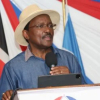
Kiharu MP Ndindi Nyoro has challenged President William Ruto’s use of Singapore as Kenya’s economic benchmark, arguing that South Korea offers a more realistic model for the country’s development.
Speaking on Citizen TV’s JKLive on Wednesday, Nyoro said economic comparisons should be based on countries with similar demographic and structural conditions. He cautioned against what he described as unsuitable parallels, noting that Singapore’s GDP per capita, estimated at about USD 90,000, is far higher than Kenya’s figure of roughly USD 3,000.
He also pointed out that Singapore’s model of state-led capitalism differs from Kenya’s current emphasis on privatisation. Nyoro said South Korea provides a closer reference point, citing its comparable population size and its development path, which began with labour-intensive industries before shifting towards technology-driven growth.
He highlighted the role of foreign direct investment and the rise of large conglomerates, known as chaebols, under the leadership of General Park Chung-hee. He added that Kenya should clearly distinguish between remittances and productive investment, strengthen human capital, and address corruption that undermines fair markets.
Embakasi East MP Babu Owino supported Nyoro’s position, stressing the differences between Kenya and Singapore in both geography and population. He noted that Singapore’s land size is only slightly larger than Nairobi, while Kenya covers more than 580,000 square kilometres. With Kenya’s population at about 58 million compared to Singapore’s six million, Owino said development strategies must reflect local realities rather than external templates.
President Ruto has continued to defend his position, maintaining that Kenya can achieve rapid transformation through discipline and sustained reforms. Speaking in Kiambu last month, he said progress depends on consistent policy implementation and investment in infrastructure, industrialisation and other productive sectors. He cited Singapore, South Korea and Malaysia as examples of countries that reduced poverty through focused leadership and long-term planning.
The debate has taken place alongside renewed public discussion about former President Mwai Kibaki’s leadership. Nyoro’s remarks on preparedness and economic planning have drawn comparisons with Kibaki, particularly on social media, where users have highlighted Kibaki’s emphasis on structured growth and institutional stability under Vision 2030.
Further attention has focused on Nyoro’s introduction of a fee-relief programme for day secondary schools in Kiharu. Under the Masomo Bora initiative, parents will pay Sh500 per term, with additional funding set aside for meals, extracurricular activities, school infrastructure and teacher incentives. The programme is expected to benefit more than 12,000 students.






Add new comment