


Heavy October-December Rains Threaten Transport Networks Across Kenya

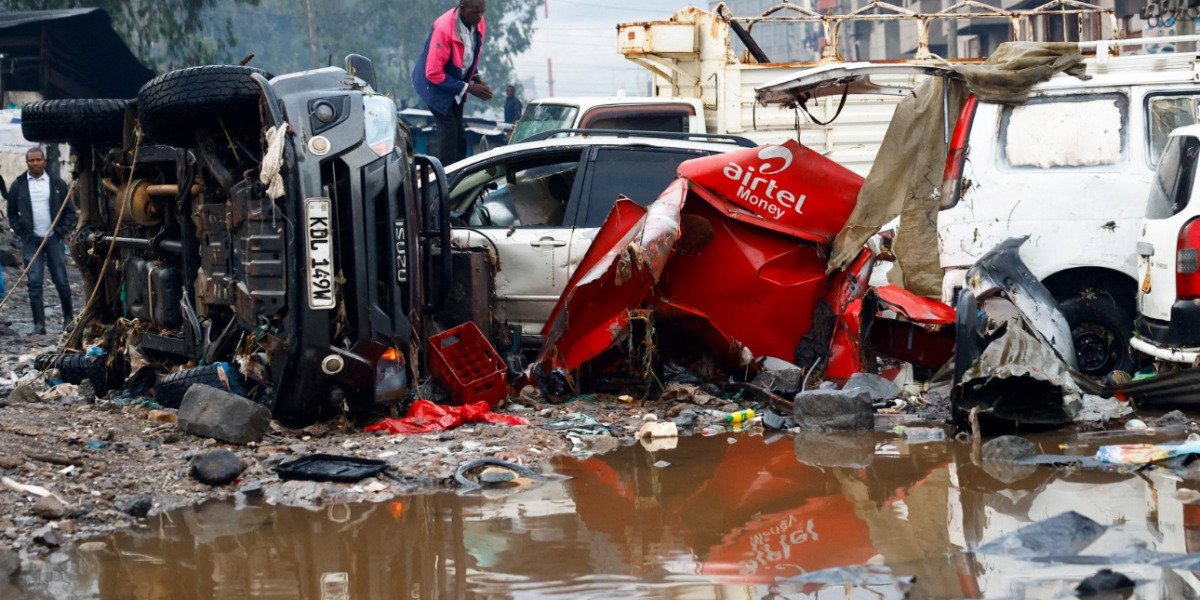
A heavy rainy season is expected across Kenya between October and December, raising concerns over whether response teams can navigate flooded roads to reach people in distress.
The IGAD Climate Prediction and Applications Centre (ICPAC) forecasts a 90 per cent probability of enhanced rainfall in north-eastern Kenya. Parts of central Kenya could receive more than 400mm during the period.
The warning comes as the country continues to deal with the impact of the March to May 2026 floods. Data from the World Health Organisation shows those floods killed 122 people and affected more than 42,000 across 27 counties.
During the early 2026 rains, key transport routes including Nairobi's Mombasa Road and Uhuru Highway were left impassable. Floodwaters also submerged the Sultan Hamud Bridge along the Nairobi-Mombasa highway, cutting off traffic, while sections of the Ahero Bridge on the Kericho-Awasi-Kisumu road were affected.
Damaged bridges, roads, power lines and water systems severely hampered movement, forcing several health facilities to cut back or suspend services. Such disruptions create a major challenge for emergency services. Victor Odera, head of emergency response platform AURA, noted that severe weather creates a double strain on responders.
“This illustrates one of the biggest challenges during severe weather: the number of emergencies taking place often increases at exactly the same time that reaching people becomes more difficult,” Odera said.
To tackle traffic gridlock and blocked roads, response platforms are turning to real-time navigation technology. AURA uses an automated system that pairs help requests with nearby vetted responders, including private security, medical teams and breakdown assistance services.
The platform has integrated Google Maps Platform into its dispatch setup to monitor real-time traffic updates and road closures when mapping routes and calculating arrival times.
“During periods of severe weather, having that level of real-time information can help us make better dispatch decisions and get responders to people in distress as efficiently as conditions allow,” Odera said.
Odera urged households and businesses to test their readiness before the rains start. He advised organisations to update emergency contacts, ensure workers know how to call for help, and keep accurate records of their location details and access routes.
Members of the public have also been asked to track weather updates, keep away from flood-prone areas, and comply with official evacuation directives.




Comments
No comments yet — be the first.